As parents, it can feel stressful monitoring our children to ensure they hit their developmental milestones. And when they don’t hit them at the same rate as other children their age, it’s especially nerve-wracking. If you are in this position, you may have asked what is joint attention in child development, and that is a valid question! There is a lot to learn about a baby’s language development.
So in this post, we are focusing on what joint attention is and why it’s important.
What Is Joint Attention in Child Development
Joint attention is a behavior that babies exhibit as they are learning their social and language skills. It’s an important marker for how they are developing.
As a speech-language pathologist, I remember when my son had joint attention. This is when your baby is able to share in something with you – an event that occurs, a sound they hear, or an interaction between the two of you.
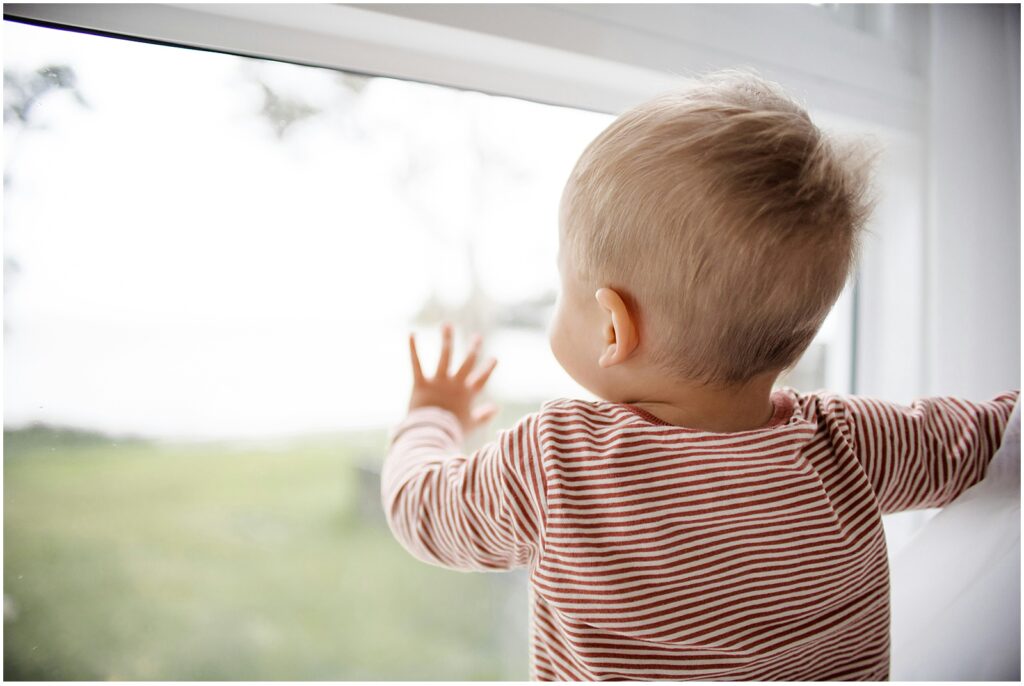
For instance, think about how your baby looks at you if they hear a siren going by outside. Or they look to you when seeing a kitten for the first time. All those amazing looks your baby gives you are them communicating nonverbally. It’s like they’re saying, “Look! Did you see that?”
Those are some of the amazing and rewarding developments we see as parents.
Ways to Encourage Joint Attention at Home
You can help your baby with joint attention by pointing at things and calling their attention to them. Because this skill develops from them first having attention.
Think about how your baby learns to track you first. You probably noticed them watch you ass you move across the room. Then from there, they develop to be able to track an object. They’ll look at the object and then look back at you to see if you saw it. Or they may look at a rattle or a toy that does something (makes a noise of some kind of something similar), and then look back at you.
You know they are communicating with that “look.”
Joint Attention and Autism
Joint attention is typically the behavior that babies exhibit before they begin to say their first words or sounds. Because it is a behavior that shows the development of their social skills, not practicing joint attention can be an early sign of Autism. If you are concerned that this may be the case with your child, I recently shared an article on some additional signs of Autism in toddlers that may help point you in the right direction.
Getting Your Child Evaluated
It is very common for toddlers not to hit their language development milestones at the same rate as other children their age. So if you are concerned about this, you are definitely not alone. My son was a late talker, and I remember how stressful it was at first trying to teach him those first few words.
However, as an SLP, I’ve worked with over 1,000 children with late talking, and an evaluation is always a good first step to identify their challenges. A late talker evaluation can help you understand your child’s specific needs when it comes to their language development, and learn if intervention will be helpful. You can check out my late talker evaluation here:
Learn More About the Late Talker Evaluation

I’m Guy Garcia. I have successfully treated over 1000 late-talking toddlers, I am a board-certified speech-language pathologist, and I am the founder of Easy Talking Toddler.